
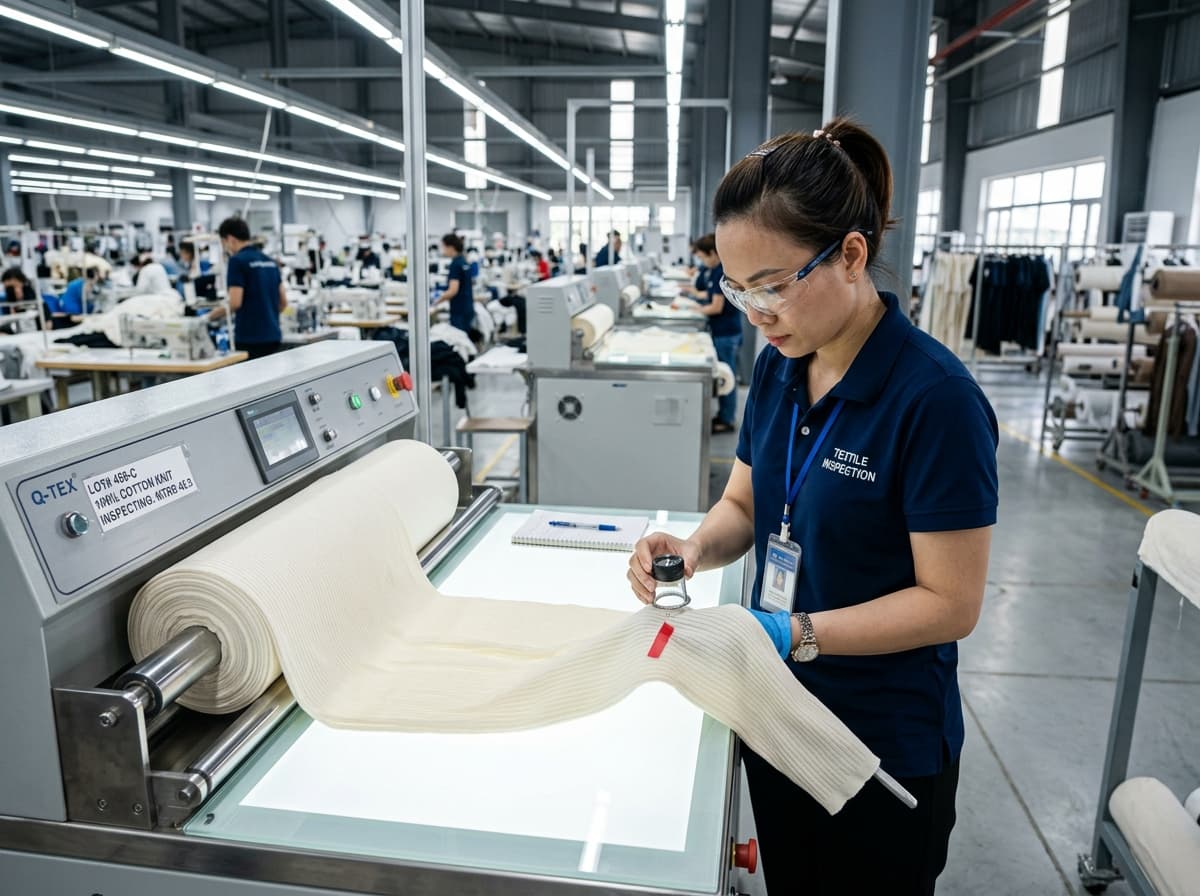
At Sikder Enterprise, quality control is engineered into every stage from raw yarn spinning and 4-point fabric inspection to in-line roving audits and final AQL 1.5/2.5 pre-shipment clearance.
Rigorous Quality Standards Built on Data & Verification
Our quality assurance protocols mirror the stringent testing criteria used by leading European and American fashion retailers.
Our 5-Stage Total Quality Management (TQM) Pipeline
From raw yarn spinning through cut panels and final cartonization, every piece passes through rigorous testing gates to guarantee zero shipment surprises.

Raw Material & Fabric Inspection (4-Point System)
Before a single roll enters the cutting room, it is examined on an illuminated fabric inspection rolling machine. Every defect is flagged with penalty points according to ASTM D5430.
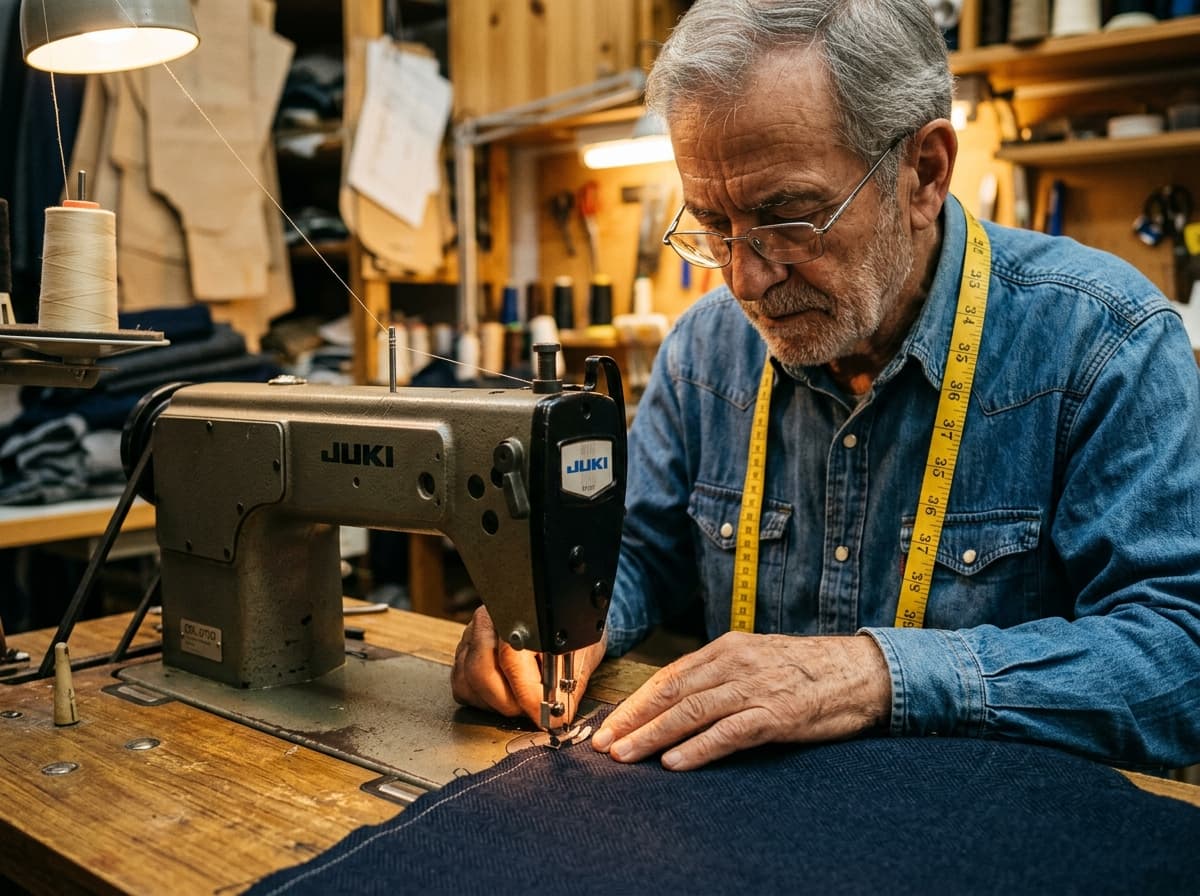
Cutting Room Relaxation & Pattern Audit
Tension-free spreading is vital for knitwear. All knitted fabric rolls are relaxed for 24 hours on spreading tables to allow natural loop recovery before pattern cutting begins.
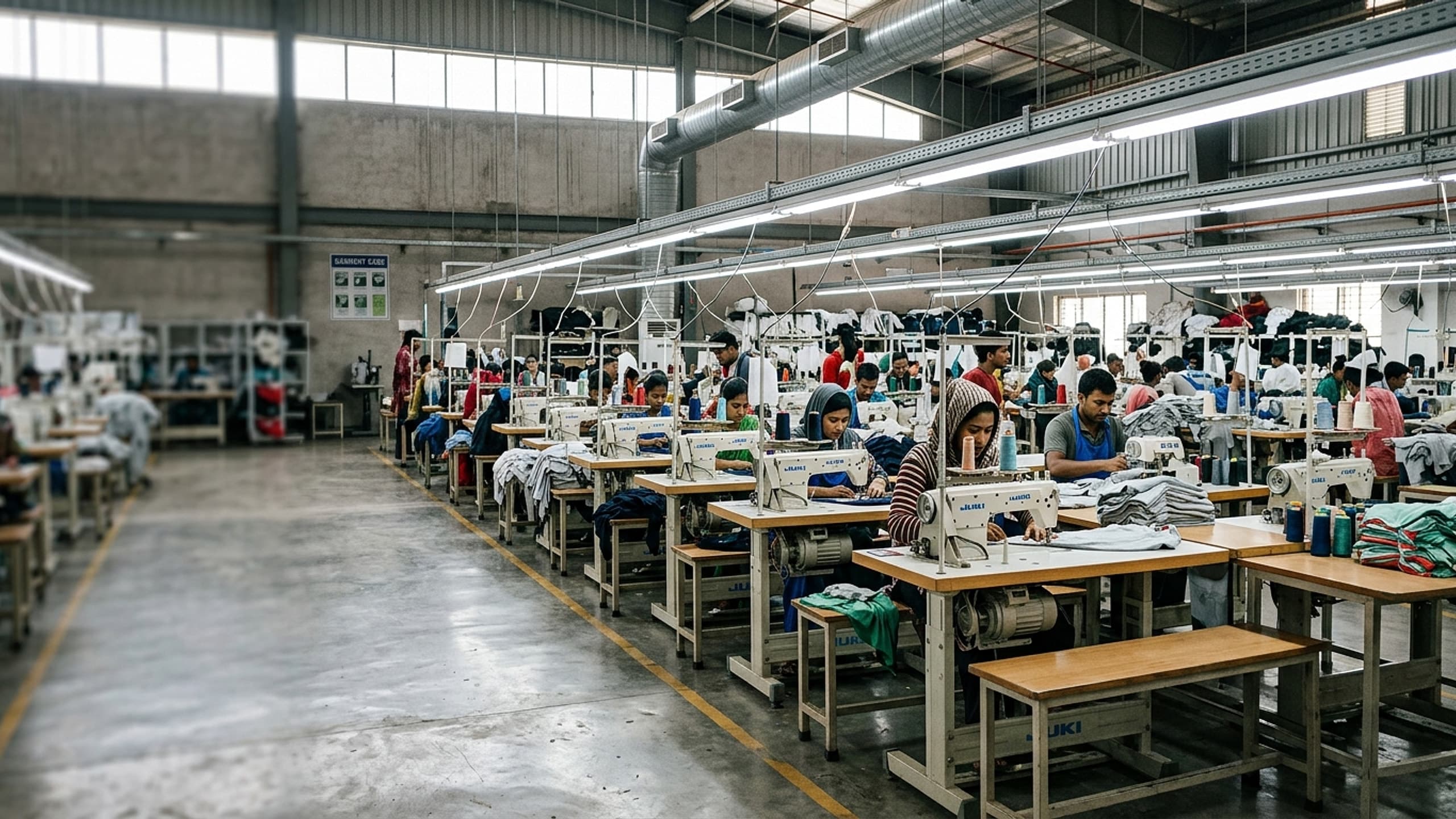
In-Line Sewing Quality Control (Traffic Light System)
Independent roving QC inspectors audit every operator on our 12 assembly lines every hour. Each workstation displays a real-time Traffic Light card (Green: Pass, Yellow: Warning, Red: Line Pause).

End-of-Line 100% Garment Inspection & Trimming
Every single produced garment is inspected by trim checkers on well-illuminated tables. Thread trimmers remove loose thread ends, and garments are scrutinized before moving to pressing.
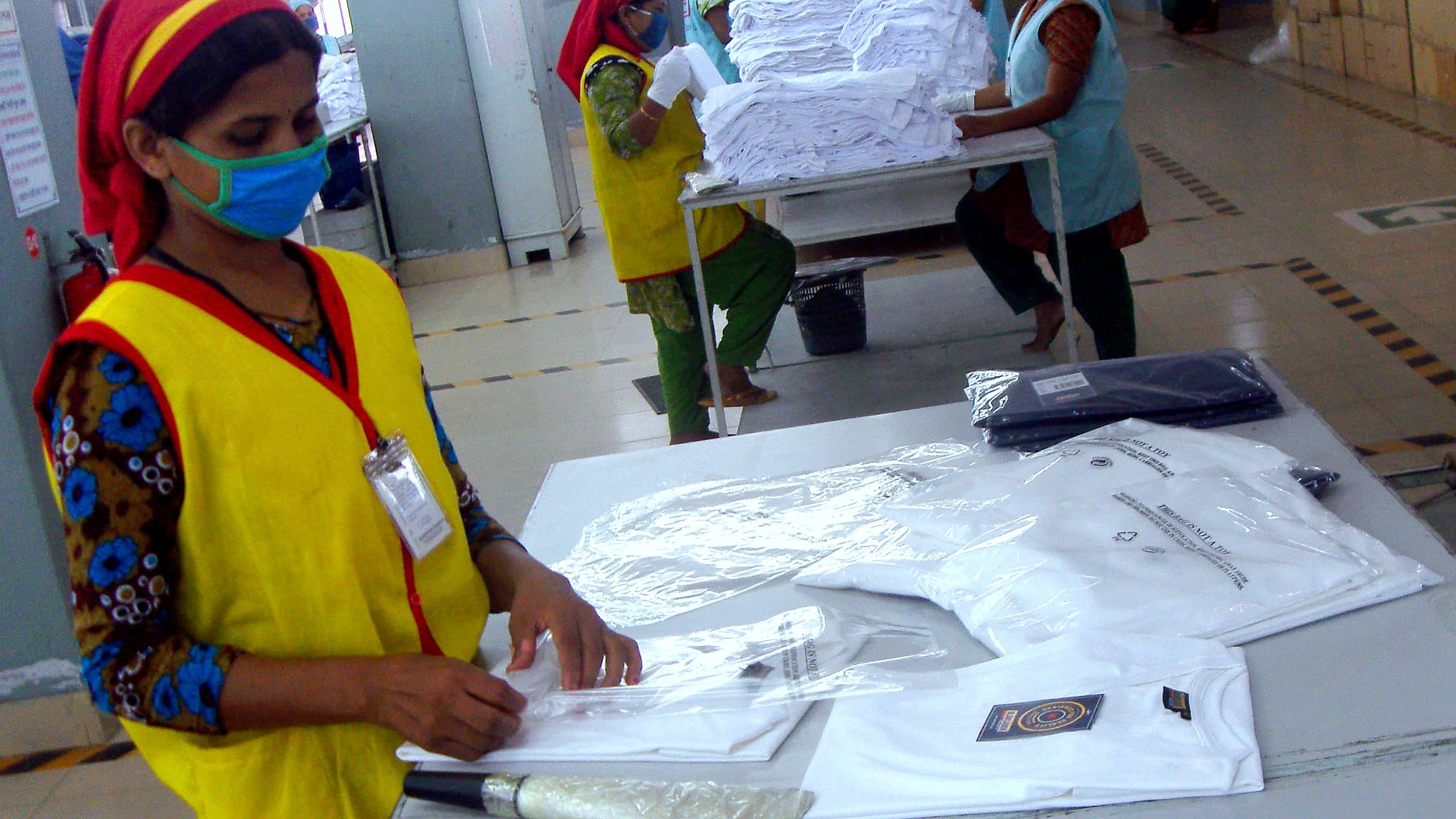
Pre-Shipment Final Audit (AQL 1.5 / 2.5 Standard)
Our internal Quality Assurance department operates completely independently from the production team. Final audits simulate third-party audits (SGS, Intertek, Bureau Veritas) to guarantee container pass rates.
In-House Physical & Chemical Testing Parameters
Our in-house fabric and garment testing laboratory operates calibrated equipment compliant with ISO, AATCC, and ASTM test methods. Every batch receives an authenticated internal test certificate.
| Test Parameter | Test Method / Standard | Acceptable Tolerance | Laboratory Equipment | Why Buyers Care |
|---|---|---|---|---|
| Dimensional Stability (Washing Shrinkage & Torque) | ISO 6330 / AATCC 135 (3 Cycles Wash & Tumble Dry) | Length: Max ±3.0% | Width: Max ±3.0% | Spirality: <4% | Wascator FOM 71 CLS automated reference washer & tumble dryer | Ensures garments retain their size and side seams do not twist after home washing. |
| Color Fastness to Domestic & Commercial Washing | ISO 105-C06 / AATCC 61 (2A / 3A Test Condition) | Shade Change: Grade 4-5 | Staining on Multi-fiber: Grade 4 | Launder-Ometer rotary wash fastness bath with stainless canisters | Guarantees vibrant dyes will not bleed onto white fabrics or fade prematurely. |
| Color Fastness to Rubbing / Crocking (Dry & Wet) | ISO 105-X12 / AATCC 8 (Crockmeter Method) | Dry Rubbing: Min Grade 4-5 | Wet Rubbing: Min Grade 3-4 | Electronic motorized Crockmeter with calibrated 9N finger load | Crucial for dark navy, black, and denim fabrics to prevent staining upholstery/skin. |
| Color Fastness to Perspiration (Acidic & Alkaline) | ISO 105-E04 / AATCC 15 (Acid & Alkaline Solutions) | Color Change: Grade 4-5 | Staining: Grade 4-5 | Perspirometer holding rack with precision incubator oven (37°C) | Prevents underarm discoloration and dye migration caused by human perspiration. |
| Color Fastness to Artificial Light & UV (Xenon Arc) | ISO 105-B02 / AATCC 16 (Xenon Lamp Exposure) | Grade 4+ (Evaluated against Blue Wool Scale) | Q-Sun Xenon Arc weathering chamber with humidity control | Prevents garments from fading when displayed in retail shop windows or under sunlight. |
| Fabric Weight (GSM) & Yarn Count Verification | ASTM D3776 / ISO 3801 (Analytical Weight Balance) | Within ±3% of buyer approved tech-pack specification | Precision circular fabric area sample cutter & 0.001g digital scale | Protects against thin, flimsy fabric deliveries and verifies contracted fabric density. |
| Pilling & Surface Abrasion Resistance | ISO 12945-2 (Martindale Method) / ICI Pilling Box | Min Grade 4 after 2,000 rubbing revolutions | Martindale Abrasion & Pilling Tester with standard wool abradant | Prevents unsightly fabric fuzz balls from forming after repeated daily wear. |
| Visual Shade & Metamerism Evaluation | AATCC Evaluation Procedure 9 / ISO 105-A02 | Exact match under primary and secondary light sources | VeriVide CAC 60 Light Box (D65 Daylight, CWF, TL84, U30, and UV) | Guarantees fabric color matches retail store lighting conditions identically. |
| Seam Strength & Tensile Breaking Force | ASTM D5034 (Grab Test) / ASTM D1683 (Seam Efficiency) | Min 120N breaking force for side seams & armholes | Universal Electronic Tensile Strength Testing Machine | Ensures activewear and workwear seams do not burst under physical strain. |
| Snap Button & Rivet Attachment Security | ASTM D4846 / 16 CFR 1500 (Infant & Children Safety) | Min 90 Newtons (20 lbs) sustained pull force for 10 seconds | Digital Snap Action Pull Tester with vise clamp accessories | Mandatory compliance for infant and kids apparel to eliminate choking hazards. |
Comprehensive Needle Safety & 9-Point Metal Detection Policy
We enforce a strict 100% needle control policy across our entire factory to prevent foreign metallic fragments from ever reaching your retail consumers.

Needle Detection Guarantee
Hashima HN-880C 9-Point CalibratedOur metal detection standard meets and exceeds EU Toy Safety Directives, US CPSIA infant regulations, and Japanese retail store safety mandates.
AQL Defect Classification & Acceptance Limits
We audit all orders under ANSI/ASQ Z1.4 / ISO 2859-1 single sampling plans with strict separation between Critical, Major, and Minor defects.
Critical Defects
Severe defects that compromise consumer safety, violate international import regulations, or present physical/biological hazards.
- Broken needle fragments or metallic wire inside garment
- Missing mandatory care, fiber composition, or country-of-origin label
- Sharp rivets, unfinished wire edges, or loose choking hazards on infant wear
- Mold, mildew, insect contamination, or dampness inside master export carton
- Chemical odor or forbidden azo dye detection
Major Defects
Functional, dimensional, or noticeable aesthetic flaws likely to result in retail customer dissatisfaction or product return.
- Critical point measurement exceeding tech pack tolerance (>1/2")
- Open seam, skipped stitches (>3mm), or broken coverstitch thread
- Noticeable shade variation between garment body and sleeves/collar
- Twisted placket, distorted collar points, or misaligned buttonholes
- Cracked or peeling graphic screen print after first wash
Minor Defects
Slight cosmetic imperfections that do not diminish garment usability, structural durability, or retail salability.
- Loose uncut thread end between 1/4" and 1/2" in length
- Slight removable handling dust spot easily cleared with air gun
- Minor pressing iron impression on inside seam allowance
- Slightly off-center hangtag placement not affecting barcode scan
- Minor packaging polybag crease that does not distort garment presentation
Certified Global Compliance & Ethical Governance
We uphold strict adherence to international environmental regulations, factory building safety, and human dignity.
OEKO-TEX Standard 100
Guarantees every yarn, button, and dye is certified free from harmful chemical substances (APEO, phthalates, heavy metals).
BSCI Audit Adherence
Business Social Compliance Initiative verification ensuring fair living wages, social safety, and ethical human working conditions.
Sedex SMETA 4-Pillar
Rigorous transparency across Labor Standards, Health & Safety, Environmental Management, and Business Integrity.
GOTS & GRS Certified
Global Organic Textile Standard (GOTS) and Global Recycled Standard (GRS) chain-of-custody tracking for eco-conscious fashion.
RSC Building & Fire Safety
RMG Sustainability Council certified structural integrity, automated fire hydrants, and electrical safety standards.
AQL 2.5 Guarantee
Strict pre-shipment statistical sampling matching independent third-party inspection firms (SGS / Intertek / BV).
Request Full Factory Audit Reports or Lab Test Dossier
We welcome buyer third-party inspection agencies (SGS, Intertek, Bureau Veritas, QIMA, TÜV SÜD) to inspect consignments at any stage. You can also request our latest BSCI audit report, OEKO-TEX certificate, and physical lab dip test records.